9.20.2007

What is Quicksand?

There was a time when almost every action movie seemed to involve the hero or villain becoming swamped in quicksand, sinking away until only their hat remains on the surface; even Flash Gordon and vine-swinging ape-man Tarzan were victims during their careers.

But contrary to what Hollywood would have you believe, it’s actually impossible to drown in quicksand, but almost as impossible to escape, as a Dutch scientist found when he produced his own home-made variety in the laboratory.

Daniel Bonn was on holiday in the Iranian province of Qom when he saw a sign saying "Danger: Quicksand". Local shepherds had told him that, periodically, camels and people (usually those who had dared to disagree with the local regime) had disappeared in the area. Realising that science didn’t actually have an answer to the quicksand conundrum, he took some samples home with him.

So what is quicksand made of?
Analysis of the composition of the "quicksand" showed that there are four key ingedients – sand, obviously, water, clay and salt. Together these materials form a structure resembling a house of cards, with large water-filled gaps between the sand particles, which are loosely glued in place by the clay.

As long as it’s left alone, the structure remains stable. But as soon as it’s disturbed, by stepping on it, the clay changes from a jelly-like consistency to a runny liquid. The effect is the same as stirring a pot of yoghurt. Liquefying the clay makes the quicksand about one million times runnier, and the whole house of cards comes tumbling down, with you inside it.

Very quickly, the sand sinks to the bottom and the water floats to the top. This is where the salt comes in. When there’s enough salt present, as soon as the clay particles liquefy, electrical charges make them begin to stick together to form bigger particles and these also settle with the sand.

The result is a very stodgy layer of sand and clay, which is twice as dense as the original quicksand and packed tightly around the trapped body parts.

So how do you escape?
Well certainly not the way Hollywood would have you do it – by being pulled out by a horse – because Daniel Bonn’s measurements show that the force need to extract a trapped foot (ten thousand Newtons) is equivalent to that needed to lift the average family car. You’d probably escape, but minus your legs.

The best way out is to try to re-build the house cards around the trapped body parts. Making small circles with each part of your body re-introduces water between the sand and clay particles, reducing the density and making it easier for someone to heave you out.

But everyone apart from a Hollywood director can take solace from the most important finding of the research – that it’s impossible to drown in quicksand – you should only sink half way. The density of quicksand, at 2 grams per cubic centimetre, is twice the density of a human (1 gram per cubic centimetre), so stuck you might be, but drowned you wouldn’t!

Original Reference:
Khaldoun, Bonn et al., Nature 437; pp 635

Chris Smith

9.03.2007

Do Bald Men get all the Girls ?

This is science, not science fiction. Research has shown that bald males command a larger harem of females than their hairier counterparts...that is, if the bald male is a maneless Tsavo lion from Kenya. In humans, male pattern baldness (or androgenic alopecia) has been linked to a number of biological pathways.

I will only focus on the best publicised cause, an over-responsiveness to DHT, or dihydrotestosterone for those who enjoy long words. This hypersensitivity may be due to a number of factors. For instance, high levels of the receptor for DHT on hair follicles, or a characteristic and more sensitive structure of the receptor in predisposed people, can cause the hair follicle to detect more DHT than is good for it. In fact, one proposal for why hair is lost in a particular pattern (hence the term male pattern baldness) is because hair follicles in the regions of typical hair loss normally express higher levels of the receptor. Chief among the culprits though, at least according to current thought, is an overproduction of DHT. The enzyme 5-alpha reductase converts testosterone into DHT. In people predisposed to baldness, the levels of this enzyme is often raised in the scalp and skin, resulting in a higher concentration of DHT that can attach to the receptors on hair follicles. On the flip side, if you have average levels of 5-alpha reductase but high levels of testosterone, it may also be possible to get more than a healthy balance of DHT, but this hypothesis is somewhat more controversial. But in support of this idea, although the pattern tends to look slightly different, women can also exhibit male pattern baldness. Normally, oestrogen counteracts the effects of testosterone, but after menopause a woman's oestrogen level falls and her testosterone (yes, women produce this 'male' hormone too) can now be turned into DHT and cause hair loss.

DHT is thought to promote hair loss in three ways: 1) Healthy follicles grow hair for a time, usually for 2-5 years, and then take a break before starting to grow hair again. DHT shortens the hair growth time and increases the follicle's hair growth holiday. This results in fewer new hairs and shorter ones at that. 2) Immediately before a healthy follicle stops hair growth, it shrinks and the hair it produces is thin and weak (vellus hair). DHT causes the follicle to shrink prematurely which is why bald people have peach fuzz on their heads. 3) Follicles need a blood supply to be nourished. DHT may cause less blood to flow to the follicles.

Bald lions
So where do the Tsavo lions come in? Unlike balding men, Tsavo lions do not lose their pre-existing hair - their manes just never grow. Nonetheless, it has been suggested that they are subject to something akin to male-pattern baldness because their manelessness may be caused by elevated levels of testosterone. This is only a hypothesis; the field work testing hormone levels of these lions has just been started a few months ago. However, maneless Tsavo lions have a reputation for being extremely aggressive, a trait linked to high testosterone. If they do have more testosterone than the average African lion it seems reasonable to suggest that more of this hormone is turned into DHT, which stops their manes from growing due to the three biological actions listed above. It is important to remember though that this may not be the cause of their baldness. Even if their testosterone levels are high, there may be other more important genetic reasons for their lack of manes. Male Tsavo lions live in two types of social groupings: Adults roam as the sole male among a very large number of females in a group called a 'pride'. This is an unusual social structure for lions since there are usually at least two males in every pride. Another bizarre social feature of these lions is that nomadic males stick together. This is very thought-provoking, particularly when it is realised that males in a pride actively do not allow other males to join. Why would some lions not tolerate other males while others seek their companionship? The idea is that these are coalitions of adolescent males that hunt together, but once their testosterone levels peak, they become too competitive and the group splits up.

Bald and a social outcast, or a sex magnet ?
Whether or not the attitude could be proven accurate statistically, there is a common conception out there that human females find bald men less attractive. Adult Tsavo lions don't seem to have that problem though. Not only does one guy get ALL the girls, but he gets more girls than the other African lions with hair would even if they were the only male in their pride. So, is this social construct a female choice or a male choice? Do the females choose to cluster around the bald male, truly making the group a 'male pride' or is the bald male forced to live only among females because there would be too much competition amongst other adult males? Unless we learn to speak Lion Lingo and question the lions directly, I suppose we will never know the answer to that question with absolute certainty. I am no zoologist, so it is possible that testosterone levels have nothing to do with social groupings, or manelessness, among Tsavo lions and it is just a peculiarity of this group.

But what if the social grouping of bald animals did have something to do with testosterone...perhaps if it we looked into it more closely, we would find something similar in humans. Perhaps men whose hair loss stems from other non-hormonal causes really ARE less attractive to women because, well, females like hair. In essence, nothing more than cosmetic squeamishness. And perhaps men whose hair loss is hormonal are MORE successful with the ladies because they send out invisible signals (pheromones) responsible for chemical attraction. Or perhaps they don't get along well with other males with clashing hormonal profiles and have had to learn to understand women better instead. Naturally, this is all speculation on my part, but it makes you wonder what lions from some remote part of the world could potentially teach us about ourselves and our dispositions !

Dalya Rosner

Ricin : The Secret Assassin

The recently discovered traces of ricin in a makeshift laboratory in a flat in London have caused a media frenzy over its potential use in a terrorist attack. Ricin was most famously used in the assassination of the Bulgarian dissident Georgi Markov when a platinum ball containing the poison was injected into his leg from the tip of an umbrella. He died three days later on 10 September 1978. The ricin-firing umbrella was developed by the Soviet secret police and was used to kill at least three other Bulgarian defectors and an attempted assassination of a fourth, again in London.

Castor BeansRicin itself is made from a naturally occurring protein produced by the castor bean plant and the way that it exerts its toxic action in the body is a story of subterfuge and deception to rival the Cold War umbrella assassinations.

The ricin molecule contains two main parts; one acts as the weapon, the other as a disguise.

The weaponry consists of a protein molecule whose job it is to prevent other proteins from being made. A protein is just a large natural molecule which has a particular job to do in the body (e.g. hemoglobin is a protein whose job it is to carry oxygen around the body) and the instructions for making these proteins are contained within our DNA. Ricin sabotages the machinery within the body that turns the instructions in DNA into functioning proteins. Without these proteins cells cannot function and die. As a result the organs in the body that are exposed to ricin start to fail. If ingested (eaten), ricin causes severe gastroenteritis and hemorrhaging followed by failure of the liver, spleen and kidneys. If breathed in, the symptoms include weakness, fever, cough, pulmonary oedema (fluid collecting in the lungs) and respiratory distress. In severe cases exposure to ricin can cause death.

The body is not without defences and one of the simplest is just to deny entry of toxins into our cells in the first place, but that is where the disguise comes in. Each cell has to let some molecules in and out in order for it to work together with the cells around it. The second part of ricin is a disguise so that when the poison encounters a cell it goes to the door where molecules are let in and is recognized as a friend. Only when it has managed to gain entry into the cell does ricin discard its disguise and use its weaponary to sabotage the protein-making machinery.

Interestingly, ricin is toxic to the very plant that makes it, but the plant overcomes this toxicity by making ricin as one long molecule incorporating both disguise and weapon stuck together in such a way that the disguise can not be taken off. Only when the ricin is excreted are ties that bind the disguise to the weapon loosened to allow the toxin to perform its deadly deception.

Martin Westwell

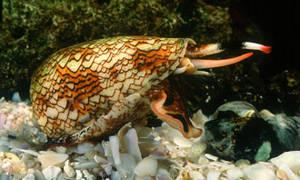
Deadly Cone Snails (Conus) Harbour Painkillers of the Future

"I seem to have been only like a boy playing on the seashore, and diverting myself in now and then finding a smoother pebble or a prettier shell than ordinary, whilst the great ocean of truth lay all undiscovered before me." Sir Isaac Newton (1642-1727)

Conus_snail_harbours_nerve_toxinsSnails. Yes, I know, it's hard to get excited. You think snail, you think, slime. You think slow, squidgy, meandering ball of wibbly-gloop. With eyes on stalks. Then again, you might just think of garlic. Snails are pathetic English garden munchers!

Or are they? Not all snails are born equal. Some snails are born with heightened killer instincts, roaming beneath the ocean's surface, waiting, hunting for that one precious meal. And we're not talking limp lettuce - some snails are content with nothing less than bagging an entire fish! And should you, my friend, be unlucky enough to disturb one of these molluscs whilst out having a leisurely paddle, you could be well on your way to the great paddling pool in the sky.

Great White sharks are passé, welcome to the world of the genus, Conus

Collecting beautifully patterned Conus snails off the north east coast of Australia might sound like hard work, but it's not all boats, sun, fresh air and sea. Dr Bruce Livett of Melbourne University takes it all in his stride, though. For nearly a decade, he and his team of enthusiastic colleagues, students and friends have sought and studied these spectacular snails.

But why is a neuroscientist interested in these animals? Because, apart from their spectacularly patterned shells, these molluscs have a secret weapon - one that may revolutionise the treatment of pain. A typical poisonous snake might unleash a couple of different nerve toxins on its furry victim; but what the Conus lacks in speed, it more than makes up for in poison. These snails are positively brimming with nasties, often shoving around 50 individual toxic mini-proteins into their victim.

Your brain, under normal circumstances, is a finely honed thinking machine. The reason being that all of its nerves are able to function correctly, sending messages, receiving messages, processing the information and giving a pretty good output. If the brain is like an organic computer, then being stung by a Conus is a bit like pouring a pint of ale on a laptop. Fizz, bang, splutter, dead.

The reason is that each of the tiny proteins that make up the toxic cocktail are targeted at different parts of the nervous system: these snails don't just 'blow the bloody doors off' your brain, they terminate it from every conceivable angle!

Conus toxins are currently undergoing clinical trials to test their safety and efficacy in the relief of pain. (Image courtesy of the National Cancer Institute).But not all the components in the venom are deadly. Some turn out to be good for you. As they say "no pain, no gain". So what about the future of pain? Painkiller research can be riddled with problems: side-effects, dependency, efficacy. What about a painkiller that is as effective as morphine but has no apparent side-effects? The relatively few humans who have witnessed a death-by-snail have noted the absence of pain. And Bruce Livett and his team now know why.

One of the toxins in the sting of the Conus victoriae species, is a string of just 16 amino acids (the Lego units that make proteins). This tiny protein, ACV1, binds to bits of the brain that would normally allow us to feel pain, and shuts them down. What we potentially have here is a powerful new generation of analgesics. This new 'drug' has done very well in pre-clinical trials and is now undergoing toxicity tests prior to entering clinical trials, the rights for development into a drug having been bought by a company called Metabolic Pharmaceuticals.

So, spare a thought for our British, plant bound relatives. Maybe they deserve a little more respect. After all, with relatives like the Conus, you don't need to be pretty.

"It is perhaps a more fortunate destiny to have a taste for collecting shells than to be born a millionaire."
Robert Louis Stevenson (1850-1894)

Barry Gibb

The Art of The Barbecue

Although the summer appears to have ended, I thought I would deal with something that provides a perfect opportunity to marry good food and wine: the barbecue.

What we mostly remember are alcohol fuelled, sun kissed days with our friends. The food on the whole is pretty ordinary, the standard fare being a variety of dried out, blackened sausages, burgers which consist of mostly bread, the dreaded vegetarian alternatives and meat off cuts. The worst are pre-marinated supermarket gloops with such exotic names as "honey, lime and ginger glazed chicken". By necessity these are often last minute affairs and we compensate for lack of quality with vast quantity (another example of our increasing Americanisation).

It doesn't have to be this way! By following a few basics barbecues can become fantastic fun AND provide great food.

The first pre-requisite is a decent barbecue. Aficionados will tell you the Weber kettledrum is the gold standard. Tedious arguments about the respective merits of gas vs. coal abound. In my experience although good gas barbecues are more user-friendly, these never quite match "coal kettles" for the unique flavors they impart on food. The other essentials are to source good quality raw materials and choose strong and sympathetic flavours but keep them simple. At two recent barbecues we had a near perfect whole leg of lamb which had been stuffed higgledy-piggledy with a mixture of bashed medjool dates, cumin and coriander seed and plenty of garlic mixed with good olive oil. The surface was smeared with preserved lemons mixed with cumin seed, salt and black pepper. This acquired fantastic smoky North African flavours with a slow roast over a bed of celery. Even more unique was a "stiff fresh" big turbot I lovingly brought back from Cornwall. We simply clipped its fins, placed it on a bed of sliced potatoes and fish stock, then barbecued it with plenty of slices of herb butter on top. The chunky, pale and flavorful flesh of the turbot took on the barbecue flavors as well as the herb butter and was utterly gorgeous.

This may sound like "posh-nosh" but was quite simple to prepare, even after work, mid-week! Speaking of turbot reminds me of my recent "surfing" trip to Padstow. We ate at Rick Stein's, which was as good as ever, although my last meal there on Sept 11th 2001 became memorable for all the wrong reasons. A poached hunk of skate with oodles of Moroccan flavours was particularly enjoyable, accompanied by a Grosset Polish Hill Riesling 1999 which was chock full of lime blossom, mango, hints of petrol (a compliment, really!) and racy acidity.

If you go to this lovely area though, please go to the Beach Hut at Watergate Bay. Run by a bunch of "extreme sport" dudes, the location is unbelievable, with views that would do California proud. More amazingly the food, whilst unpretentious, concentrates on prime seafood which has just stopped breathing and is consistently excellent. The service is relaxed and the prices very fair, although the wine list could do with a little beefing up. This is one of the best non-kept secrets of foodie Britain and daily flights from Stansted to Newquay bring it within range of long weekends...

So to barbecue wines…

La Spinetta Bricco Quaglia Moscato d'Asti 2001. Lovely grapey overripe fruit flavors with gentle froth and sweetness. Great aperitif or fruit salad wine (£8.00 in Noel Young, Cambridge. If you want a cheaper alternative Villa Jolanda from Tesco (£3.00 this month) is not bad).

'Vixen' Fox Creek NV. The ultimate barbecue wine. Creamy black cherry with spice and bubbles! Shiraz with bubbles? Stop being a snob and try it! (£11.00 in Noel Young, Cambridge).

Bollinger NV. My favourite champaign. Yeasty and meaty stuff with good acidity. Widely available at £22-26.

Soave Classico 2001 Pieropan. Not like your usual sugar and vinegar water Soave. Full of apricot and overripe melon, unctuous body and no acidity so not for keeping (around £8.50 Noel Young, Cambridge - pricey but well worth it).

Kleos Luigi Maffini 2000. Yummy smoky, blackberry jam and raisins. Classic bitter-sweet Italian flavors with plenty of guts to last. (£9.49 in Noel Young, Cambridge).

Tower Estate Shiraz 1999 Barossa and Hunter Valley. Who says vintages and regions don't matter in Oz? Both from the same estate but one is full on, with lots of spicy black cherry and oak while the other is more refined, leathery and cassis dominated. Both are good value at £12-13 from Rick Stein's deli.

Varuna Aluvihare

Human Cloning, Part 2 - The Process of Animal Cloning

In the first part of this mini-series we looked at the earliest stages of mammalian development, from the egg and sperm to the ball-like blastocyst. In this second part we turn to the story of cloning, and the technical problems and limitations of the process.

Although cloning burst onto the global media scene with the arrival of Dolly the sheep in 1997, the technology has been around for decades. At its most basic the process involves taking an egg cell and replacing its chromosomes (DNA) with the DNA from another cell, and kick-starting the 'developmental programme' with chemicals, or an electric pulse (figure 1). This process is known as Somatic Cell Nuclear Transfer, or SCNT for short. Hans Spemann first proposed such a "fantastical experiment" in 1938, and in 1952 tadpoles were cloned from embryonic frog cells. John Gurdon first successfully cloned frogs from differentiated (developed) cells in 1962 and since then the full list of successfully cloned animals has expanded to include also mice, cows, rabbits, pigs, sheep, cats, horses, zebra fish and monkeys.

The process of cloning. The genetic material is removed from an egg cell and replaced with the nucleus from an adult cell of the animal to be cloned. A chemical or electrical shock is used to trigger development.

1. Cloning requires an egg cell, and an adult donor cell.

The (unwanted) chromosomes are removed from the egg cell and discarded.

The nucleus, containing the DNA to be cloned, is removed from the donor cell.


2. The donor nucleus is inserted into the empty egg cell, a process called somatic cell nuclear transfer (SCNT).

Afterwards the egg contains a full (adult) set of chromosomes as if it had been fertilised normally.


3. A pulse of electricity, or a chemical 'shock', kick-starts the development process, and the embryo begins to grow.


4. Cell division begins. The subsequent development of the embryo depends upon how successfully the donor nucleus has 're-programmed' the egg.


Figure 1 - The process of embryonic cloning

However, not all clones are created with equal ease. Cloning success is much more likely if embryonic cells are used as nuclear donors. These could be embryonic cells taken from an early fetus, or cells from the inner cell mass of the blastocyst (see Cloning Part 1). What made Dolly so special was the fact she was the first mammal to be cloned using a cell taken from an adult - and even then she was the only live animal to be born out of nearly three hundred attempts. Since then, other animals have been cloned from adult cells, but the efficiency of achieving live births is still extremely low. So what's the big difference between embryonic and adult cells? The key lies in the concept of epigenetics, which was introduced in the first part of this series (see also an earlier article about genetic imprinting).

Cloning requires the reprogramming of an adult or embryonic cell right back to the very start of development. Adult cells are more differentiated (specialised) than embryonic cells - they have made decisions about what sort of cell to be and these choices are said to be imprinted within the cell. For example, an embryonic cell has the potential to become all sorts of cell types, whereas an adult liver cell can only be a liver cell. So embryonic cells only have to "forget" a few decisions when they are cloned, whereas an adult cell has been through many more choices so, essentially, the clock has to be wound back further.

Cells remember what type they are due to epigenetic modifications of their DNA: molecular tags which mark certain genes as being switched on or off. These tags are very similar to those on the sperm which are removed shortly after fertilisation by reprogramming factors in the egg. In order for an adult or embryonic cell to be reprogrammed by cloning (by exposing it to the reprogramming environment of the egg), the epigenetic marks within the DNA must be removed. Adult cells are believed to have more of these tags than embryonic cells, so are harder for the egg to reprogramme.

Whether the donor cell is adult or embryonic, a successful clone must negotiate all the stages of development from one cell to a blastocyst and then on to being a fully-grown baby. But embryos can only be grown outside the womb in a test-tube until the blastocyst stage. After this, the embryo needs to form a placenta and take resources from the mother. Researchers must transfer the little balls of cells into the womb of an appropriate surrogate mother, where it can grow further. In fact, embryos created by mixing eggs and sperm in IVF clinics are usually transferred before the blastocyst stage- often when they only consist of two to eight cells.

Experiments in animals such have mice have shown that there is a high proportion of success in growing cloned embryos up to the blastocyst stage. Even embryos containing twice the normal number of chromosomes can grow quite happily to this point, even though a baby with this many chromosomes could never be born. Yet if these embryos are transferred into surrogate mothers, very few of them produce babies. This is because the egg contains many of the ingredients required for the early stages of development, and will direct the formation of a blastocyst even if there are severe problems with the DNA and chromosomes within the embryo. But to grow from a blastocyst to a baby requires complex patterns of genes being switched on and off. This can only happen if the DNA of the donor nucleus has been fully and correctly reprogrammed by the egg during the first stages of the cloning procedure. So it appears that even if you can create a clone, and even if that clone makes a blastocyst, you are still highly unlikely to end up with a baby.

But all is not lost. Blastocysts are extremely useful even if they don't go on to make a fetus. They are the source of the infamous embryonic stem cells, or ES cells for short. ES cells are made by removing the inner cell mass from the blastocyst and growing it in a dish (figure 2). After a time, a colony of special cells with almost magical properties appears. These cells have the capacity to form any tissue of the body, and can be treated with various chemicals to achieve this. They can also replicate themselves many times, to create large populations of useful cells. Genetic engineering techniques work very well in ES cells, allowing mutant genes to be repaired, and new genes to be added.

How ES Cells (embryonic stem cells) are made. The inner cell mass is removed from a blastocyst and transferred to a petri dish. The cells multiply and can then be split into smaller clusters of cells which will themselves continue to grow and multiply.
1. To make embryonic stem cells (ES Cells), the inner cell mass is removed from a blastocyst.
2. The inner cell mass is transferred to a petri-dish, covered with a nutrient solution, and allowed to grow.
3. The inner cell mass soon develops into a large cell colony which can then be divided into smaller clusters of cells that will themselves continue to grow and multiply.

Figure 2 - How to make Embryonic Stem Cells (ES Cells)

Much weight has been placed on human ES cells as a viable therapy for many diseases such as Alzheimer's and Parkinson's. Although we are far from fully understanding the biology of these mysterious cells, they are certainly brimming with promise. In part three of this series we'll look at the latest developments from South Korea, combining ES cell technology and cloning. Are human clones just around the corner? Or are they already here?

Kat Arney

Human Cloning, Part 1 - Making Babies the Natural Way

Few people can have escaped the newspaper headlines over the past few months. The fertility doctor Panos Zavos claimed to have cloned a human baby, while a team of researchers in South Korea also presented their clones to the world. So what's the difference between these stories? And are we really going to see cloned babies peering out from their prams in the near future? In this first article we will spy on the earliest moments of life: how an egg and sperm make a ball of cells that eventually become a baby. Then we can ask if, and how, these processes can be bypassed by cloning.

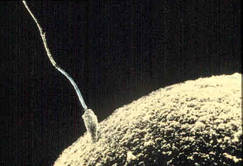
The first thing to understand is how babies are made - no sniggering at the back, please! To do this, we need to know a bit about eggs and sperm. Eggs are relatively large cells and contain lots of biological goodies required for early development. They are also rather unusual in that they are frozen in the act of dividing their DNA from a full set of chromosomes to half a set (see figure 1, below). This division is important because the sperm also carries half a set: together they make up a full set in the new baby.

At the moment of fertilisation the sperm enters the egg, and things start getting exciting (at least, in biological terms). The following descriptions show what happens in mouse development: we currently do not know whether human development is exactly the same, but it is likely that many events are similar. When the sperm goes in, it reactivates the division process in the egg, causing the arrested chromosome half-sets to separate. The unwanted chromosomes are booted out and form a little cell called the polar body, with no further part to play in the unfolding developmental drama (see figure 1, below). The remaining egg chromosomes organise into a ball-like structure termed a pronucleus. At the same time, proteins in the egg begin to unpack the sperm DNA, expanding it to form another pronucleus (see figure 1, below).

Eggs and sperm are produced by a specialised form of cell division called meiosis during which one from each pair of chromosomes is discarded, producing cells with half the normal number of chromosomes. When egg and sperm unite  during fertilisation the correct chromosome number is restored and a genetically unique embryo is produced.

1. An early egg cell.

Humans carry 23 pairs of chromo-somes. We inherit one half of each pair from our mothers, and the other half from our fathers. These half-sets of chromosomes are produced in a special form of cell division called meiosis which produces eggs and sperm.

2. A mature egg.

In this egg, for simplicity, only one pair of chromosomes is shown (in pink). The process of cell division remains frozen until the egg is fertilised by a sperm

3. Fertilisation.

When a sperm penetrates the egg it kick starts the completion of meiosis. One of each pair of the egg's chromosomes is randomly ejected from the cell to form a structure called a polar body. The remaining chromosomes form the egg pro-nucleus.

4. One cell embryo.

The half-sets of chromosomes from the sperm are unpacked to form the sperm pro-nucleus. As each pro-nucleus contains half the normal chromosome number, together they produce a cell with a full complement of genetic material.

Figure 1 - The formation of a mature egg and a single celled embryo.

But strange things happen to the sperm DNA: it is stripped of methylation, a special molecular tag that helps the cell to use its genes properly. In the first few hours of development other dynamic changes happen to the sperm pronucleus, especially alterations in the DNA packing proteins within it. These changes in methylation and packing proteins are termed "epigenetic modifications", as they affect the DNA without actually changing the underlying DNA sequence - only the tags and markers around it. Epigenetic marks are important because they tell the cell which genes to use in different types of cells. This is crucial because all our cells contain essentially the same DNA (and therefore the same genes): it is the different patterns of gene usage that give all our cell types their distinct characteristics. Some epigenetic marks act as silencing signals for genes, while some have an activating effect. For example, in a liver cell, liver-type genes would have activating marks while muscle genes would have silencing marks. Conversely, in a muscle cell the muscle-specific genes have activating tags whereas the liver genes are silenced.

Many epigenetic changes take place while the embryo is still a single cell, and these mainly occur within the sperm pronucleus. These molecular upheavals are essential for reprogramming the sperm, so it can be used correctly in the next steps of development. But the epigenetic adventures don't stop at the one-cell stage. The new embryo divides into two cells, then four, then eight and so on until it is a ball of around a hundred cells (see figure 2). Throughout this flurry of activity, more molecular tags are removed from the DNA while other epigenetic modification patterns are established. Eventually, after 4 to 5 days, the ball of cells begins to take shape. A cavity forms and fills with fluid, pushing the cells outwards until the ball is almost hollow and looks rather like a football. We call this a "blastocyst". But the blastocyst is not quite hollow, because lurking on one side is a small clump of cells, somewhat obviously named the "inner cell mass". It is from this unpromising cluster that we all grew: these are the stem cells of the embryo. It is also clear at this stage that there are distinct epigenetic differences between the outer cells and the inner cell mass.

The egg and sperm fuse producing an embryo with a full set (23 pairs) of chromosomes. The embryo grows by cell division (mitosis), doubling the cell number with each division to eventually produce a hollow ball of cells called a blastocyst. The inner cell mass produces the future baby whilst the outer cells form the placenta, umbilical cord and the membranes that surround the developing baby.
The 2 pronuclei merge, producing a cell with a complete set of 46 chromosomes (23 pairs), The cell begins to divide, giving rise to 2, then 4, then 8 cells, and so on. The cells continue to divide, undergoing further epi-genetic changes until they eventually produce a cluster of cells resembling a mulberry, called a morula. A blastocyst is a hollow cell ball containing a cluster of stem cells (the inner cell mass). The inner cell mass (which gives rise to the baby itself) is epi-genetically distinct from the outer cells, which produce the placenta.

Figure 2 - The development of the early embryo

By this time, the embryo has made it to the uterus (womb). The outer cells of our embryonic football start invading the inner wall of the uterus and eventually make the placenta, the large organ that allows nutrients and waste to be exchanged between the mother and the baby. Meanwhile, the small clump of stem cells start dividing and undergo yet more epigenetic changes. An amazing programme of gene activity starts in these modest cells, causing them to organise and create all the parts of a new life. In the next article we'll find out how how cloning fits in to this natural developmental agenda.

Kat Arney

The Great White Shark

It's late in the afternoon. The water is dark and an especially large amount of plankton reduces the underwater visibility to a minimum. Some time ago it occurred to me that with such poor underwater visibility I could probably forget about the object of my visit, to take underwater photos of the great white shark.

Like many previous occasions, I am sitting at the boat's stern between the two 80 HP outboard engines, the camera levelled. Through the viewfinder I am watching the neoprene seal-dummy which our little boat is pulling behind it on a fishing line. I support my arms on my knees, to ease my tense muscles. In the past I have often had to remain in this position from the early afternoon until sunset, through heavy swell, rain and storms, just to take the picture of my dreams - a breaching white shark, leaping for prey. Until now, all my efforts have been in vain.

South African fur seals on Geyser Rock, off the coast of Gansbaai, South AfricaSouth African fur seals cross the dangerous "shark alley" to catch fish.

Dyer Island is located six nautical miles off the coast of Gansbaai (170 kilometres south-east of Cape Town), on the opposite side of which is the small island known as Geyser Rock which is home to an estimated 60,000 South African Fur Seals. As long as the seals stay ashore, they are safe. But when they leave for the open sea to catch fish, they have to negotiate a dangerous shark-infested channel between the islands called "shark alley" which, not surprisingly, is reputed to the best place in the world to watch white sharks.

The sharks patrol mercilessly here, and there is no way to escape them. The seals run the same gauntlet when they return to the island, and those swimming alone, and very young seals swimming close to the surface, face the greatest threat.

This is the scenario we have attempted to reconstruct in this case, with the hope of luring a white shark to reveal itself to the camera. For hours I have been keeping my lens pointing at Koekie, the artificial neoprene seal bobbing along behind the boat. Suddenly, a huge and very heavy body is rocketing out of the water like a torpedo. It has "Koekie" in its mouth. Everything happens in a split second.

It's a precise attack with a fatally perfect timing. A real seal would not have stood the slightest chance. Every single square centimetre of this exquisite creature is vibrating energy. An unforgettable sight. The incredible dynamic of the leap is captured in the picture.

South African fur seals cross the dangerous "shark alley" to catch fish.Great white shark breaching
Geat white sharkA shark takes the bait.

The cause of this unpredictable and unusual attack seems to be the movement, the form and the size of the prey. Until now, such breaching sharks have only been observed in the False Bay and nowhere else in the world (see Peter Benchley/David Doubilet, Great White, National Geographic April 2000).

The great white shark (Carcharodon carcharias) has been around for at least 3.5 million years, but now it is acutely threatened by extinction. It remains to be seen whether the species is already "genetically extinct" - in other words there are so few individuals left that the survivors are genetically very similar to one another and are less likely to be able to withstand other insults that nature can throw at them. The number of sharks, of all kinds, caught every year is estimated at 100 million. Half of it is 'bycatch', which is thrown away. With this overfishing the shark population is irreparably damaged. Due to the decimation in their numbers, which has lasted for decades, and their low reproduction rate, the prospects for the great white shark do not look good. And even though, since last autumn, it has been internationally protected, supervision of the ban on fishing has not been easy.

But perhaps modern science will be able to help at the last minute - at least in this area. A new, very specific rapid test, which only picks up material from white sharks, is able to prove almost error-free, if there are any parts or remains of white sharks in a sample, which would constitute an infringement of the prohibition. This biochemical test, called Pentaplex PCR test or bi-organelle test, was developed by Prof. Mahmood Shivji of the Nova University in Florida, USA.

Great white shark
Great white shark Great white shark

Part of the image problem facing sharks is thanks to the movie "Jaws". As one review I came across put it, "Peter Benchley's world bestseller has become a Blockbuster, which changed the untroubled relationship between humans and the sea and its inhabitants forever. The primal fear of the danger from the depths was given a fearsome face". Peter Benchley, the author of "Jaws", has since become one of the world's most prominent shark protectors. His latest book is titled "Shark Trouble. True Stories About Sharks and the Sea".

Marine engineer and underwater photographer Klaus Jost preparing to diveSharks play an important role in the ecosystem of the sea and they have always fascinated me. I have been responsible for extensive underwater work in many large harbour construction projects all over the world, usually under conditions of poor underwater visibility. Altogether I have spent almost 13,000 hours underwater. There have always been sharks, but I have never had any problems with them. The dreaded inhabitants of the oceans are anything but man-eaters and aggressive monsters. In reality, very few of the 460 types of sharks discovered so far pose a threat to humans.

My objective is to document the sharks on the 'red list', to make them known to the public at large, and to make people think. The documentation of these animals is very difficult and, unfortunately, extremely time and cost-intensive. But sharks have no lobby and there is not much time left. If we don't move fast enough they face extinction before they have even been researched and documented.

Klaus Jost

The Cambridge Computational Biology Institute (CCBI)

Recent technological developments in biological science, and in particular in molecular biology, have led to a massive increase in the amount of data available in biology and medicine.

The volume of DNA and protein sequence data alone is enormous, and is increasing exponentially. Sequence data are just the beginning of the information explosion in the life sciences. New floods of data will emerge from many areas: microarrays designed to study spatial and temporal patterns of gene expression, experiments to understand how proteins, DNA and RNA interact with each other, from genomic technology applied to cancer, from studies of molecular variation in natural populations, and from studies that show how these variants relate to phenotype. The arrival of extensive data has led to the realisation that the life sciences must become more quantitative. This has fuelled the growth of the field of computational biology and has created tremendous opportunities for cross-disciplinary research. As a result, the Cambridge Computational Biology Institute (CCBI) has been set up to stimulate and draw together expertise in computational biology from across Cambridge University and beyond.

Figure 1 : The DNA Helix - The volume of DNA sequence data is increasing exponentially.

The Cambridge Computational Biology Institute (CCBI) aims to :

- Carry out basic research

- Create new cross-Cambridge research projects

- Co-ordinate grant funding opportunities

- Stimulate collaborations within and beyond Cambridge

- Provide access to computational resources for researchers at Cambridge

- Run workshops, conferences and seminars

- Launch new degree programmes

- Create a consortium of large and small companies

Research
As one of its first programmes of research the CCBI will address the prevention and treatment of common diseases by modulation of the underlying causes. It will make use of the expertise in Cambridge in genetics, computer science, clinical resources, epidemiology and maths &statistics to investigate the genes, mechanisms, causes and prevention of common diseases. It will undertake genome-wide surveys of DNA polymorphisms in cancer, diabetes &obesity, and immune-mediated disease such as, autoimmunity, allergy and tuberculosis. Studies of disease-associated genes and pathways will complement biological, structural and clinical research. The aim is to begin to fuse quantitative biology into clinical care.

Figure 2 : Nerve cells (neurones in green, astrocytes in red) generated from neural stem cells grown in cell culture.
Figure 2 : Nerve cells (neurones in green, astrocytes in red) generated
from neural stem cells grown in cell culture.

In addition to the wide range of research already in progress in the member departments of the CCBI, it is intended to develop a number of central research themes. Two themes already identified and being supported by the Cambridge-MIT Institute are:

Transformation of drug discovery and development by creating high throughput assays using stem cells that have been cultured in microfabricated bioreactors.

Application of systems biology and stem cell research to the study and identification of drug targets in complex diseases such as cancer and inflammation.

Computational biology is a priority of the University's Schools of Biology, Clinical Medicine, Physical Sciences, and Technology. Almost every department in each of these Schools is a participant in the Institute, as are the European Bioinformatics Institute, the Wellcome Trust Sanger Institute, the Medical Research Council's Laboratory of Molecular Biology, Cambridge and the Babraham Institute.

Figure 3 : The crystal structure of the Holliday junction DNA, a universal intermediate of DNA recombination, bound to a RuvA tetramer from E. coli. - Ariyoshi et al. (2000) PNAS 97, 8257-8262; PDB code 1c7y). Image kindly provided by Dr. Kenji Mizuguchi.
Figure 3 : The crystal structure of the Holliday junction DNA, a universal intermediate of DNA recombination, bound to a RuvA tetramer from E. coli.

It is also intended to form a consortium of large computer and pharmaceutical companies to support the Institute and collaborate in its work. It is hoped also to draw in some of the numerous small biotech and high-tech companies in the Cambridge region.

The Institute will work closely with the Cambridge eScience Centre, and the scientists who participate in the initiative will have access to massive computing resources, including those of the Cambridge-Cranfield High Performance Computing Facility, and to expert advice in their use.

Education
There is a world-wide shortage of high-quality computational biologists. In order to address this, an important part of the CCBI will be a new MPhil degree will take advantage of the unique strengths of Cambridge in the biological, medical, physical and mathematical sciences. The eleven-month course is aimed at introducing students to computational biology and other quantitative aspects of modern biology and medicine.

Figure 4 : Delegates at a recent CCBI Industry Information Day, Centre for Mathematical Sciences

It will also provide a grounding in business management and the management of technology and innovation. It is intended both for those whose first degree is in biology and for computer scientists, mathematicians and others wishing to learn about the subject in preparation for a PhD course or a career in industry and commerce. The course has been developed by the CCBI and will be run by the Department of Applied Mathematics and Theoretical Physics at the Centre for Mathematical Sciences. It is funded by the CMI. The course director is Professor Simon Tavaré.

Engaging Industry
A key component of the CCBI is to facilitate and encourage exchange of knowledge between academic researchers and their industrial counterparts in businesses of all sizes. It will also forge close working relationships with and between those companies that are leading the development, and application, of computational biology. It will allow the CCBI to develop and integrate the interests and requirements of industry, in particular in the development of pharmacogenetics and genomics and the discovery of drugs that are more specifically designed to the underlying causes of disease.

About the author :
Dr. Karen Smith is a neuroanatomist and the Business Director of the Cambridge Computational Biology Institute, University of Cambridge

For general information, contact:
Cambridge Computational Biology Institute,
Centre for Mathematical Sciences,
Wilberforce Road,
Cambridge CB3 0WA

Cambridge University  Corporate Liaison Office

Cambridge Computational Biology Institute

Karen Smith

Genes for Bigger Brains

Humans have exceptionally large and complex brains. Two genes, microcephalin and ASPM, are suggested to have played a role in our cerebral evolution since mutation of either can lead to the severe clinical condition microcephaly (small brain). And studies carried out by researcher Bruce Lahn and his colleagues suggest that both genes might still be involved in the continuing evolution of human brains.

The exact DNA sequence of a gene can vary slightly from person to person due to the accumulation over time of harmless sequence changes, or mutations. This variation can be likened to the tuning of a radio station: small movements of the dial may or may not alter the quality of reception. Similarly, small DNA sequence differences (variants) may or may not alter the gene's functional ability. In terms of radio MHz variants it would be easy to tell if one of them improved the audible signal. In gene terms, however, it can be difficult to directly determine whether a particular sequence variant confers improvement.

One good indicator is if the variant has become prevalent in the human population. This would strongly suggest that the evolutionary tuning dial has found a gene variant which gives those individuals carrying it some sort of survival or reproductive advantage. This is so called "positive selection". By sequencing approximately 90 human DNA samples from a panel of ethnically diverse individuals, the Lahn group found that for both the microcephalin and ASPM genes, one predominant variant exists. To test whether, as suspected, the genes have undergone positive selection, the group calculated how likely it was that these gene variants had reached their present prevalence in the population just by chance. They found that, no matter which possible model of human demographic history they applied, given the high frequency of the variants, such a random emergence was extremely unlikely, confirming that positive selection had almost certainly taken place.

Interestingly, positive selection in both genes has been relatively recent. Divergence of anatomically modern humans is estimated to have occurred about 200,000 years ago. Using mutation rates as a kind of "molecular clock", the team determined that the prevalent microcephalin variant emerged approximately 37,000 years ago, while the prevalent ASPM variant appeared about 5,800 years ago. The group then went on to look at the global distribution of these positively-selected variants. By sequencing the versions of these genes carried by 1200 people from across the globe they found that the preferred microcephalin variant was common in all but sub-Saharan Africa, while the preferred ASPM variant was common only in Europeans and Middle-Easterners. The authors point out that emergence of the microcephalin variant coincides with archaeological estimates of the movement of humans into Europe and development of modern human behaviours, such as art and symbolism (approximately 40,000 years ago), while the emergence of the ASPM variant coincides with the development of written language and cities around 5000-6000 years ago.

Such correlations, tidy as they may be, could lead to premature and potentially controversial speculation. It is therefore important to note that so far the group has no evidence as to the possible function under positive selection. Despite this the group has already patented the tests to determine whether an individual carries the preferential variants "we just thought we should patent the genes in case sometime in the future the tests become desirable commercially" says Bruce. If Bruce's pet theory that the genes affect cognitive ability turns out to be true, these tests could raise serious social and ethical issues. But did Bruce himself test positive for the preferred variants? Perhaps wisely he has "decided to keep it a mystery for the time being". Both genes are known to regulate brain size and related studies suggest they might control cell proliferation (growth) in the developing brain. A related function such as motor control, cognition, brain size or susceptibility to neurological or psychiatric diseases is therefore possible but far from proven.

Ruth Williams

Global Warming, an Ecosystem Shift, and Sharks in Alaska

The Kodiak Alaska Department of Fish and Game office door flew open and in tromped two fishermen, one with a loaded shotgun, and both with an attitude. "We need to talk to the biologist" the larger bearded man stepped forward, "the one who closed the shrimppin!" The fishermen told the biologist to "either open the fishery or there would be trouble," and that's when I got the telephone call.

At the time I worked for the Alaska Department of Fish and Game's Commercial Fisheries Division, at the headquarters' office in Juneau. The Kodiak biologist put me on the telephone with the irate fisherman, the one with the gun. "We are just trying to do our job," I exclaimed, but it was difficult to explain the Department's position to a fisherman who needed to fish, needed to work to pay bills, keep the house, and feed the kids, all the things that are important to any father. Nobody got shot that day, and the Kodiak fishermen were restricted from fishing for shrimp and crab, fisheries that had been worth millions of dollars the year before.

Trophic Regime Shift
Closing the crab and shrimp fisheries in the Gulf of Alaska was the only way the Alaska Department of Fish and Game could protect the breeding stock, but populations continued to decline. That was in the late 1970s, and through the early 1980s. Mid-water trawl surveys done from the 1950s through the 1980s showed the shrimp, crab, and forage fish (small, high-fat, schooling fish such as herring and capelin) populations declined dramatically during the mid-1970s (see Figure 1). Additionally, data showed huge increases in other species, especially larger predatory fish like Pacific cod, walleye pollock, halibut, and arrowtooth flounder. In a few years the Northeast Pacific ecosystem had changed, with a new suite of species dominating the northeast Gulf of Alaska. Scientists refer to this change in species composition as a trophic regime shift. Small net trawls reveal the trophic regime shift in Alaska over the past 30 years.

Figure 1 Pictorial evidence of the Northeast Pacific regime shift. The methods and locations for collecting the sample from the mid-water small-mesh trawls were similar from year to year.

At the same time the shellfish population was declining in the Gulf of Alaska, shrimp and crab populations were on the increase in the northwest Atlantic Ocean, off the coast of Newfoundland. As the Earth warms we can expect the Gulf of Alaska water temperature to increase, but the in the waters off Newfoundland the temperature will probably decrease for a time as cooler water from the melting Arctic Ocean ice cap flushes past. The two oceans appear to be connected, but going in opposite directions.

Regime shifts are a change in the marine ecosystem occurring inter-decadally and globally. They are induced by what is referred to as climate forcing, or increases in global temperatures or global warming. As oceans warm, the habitat used by a suite of small plants and animals (phytoplankton and zooplankton) will change, often promoting an entirely different suite of phytoplankton and zooplankton. Certain phytoplankton and zooplankton will promote a benthic (bottom of the ocean) ecosystem, while others appear to promote a pelagic (free living in the water column) ecosystem. Colder waters in the Gulf of Alaska seem to promote the benthic system, and the same is true for the waters off the coast of Newfoundland. Warm waters in the Gulf of Alaska have been favourable to pollock and flatfish, but also to salmon which have had record survival and returns in Alaska since the 1980s.

Beginning in the late 1970s, Alaska researchers observed numerous changes in the Gulf of Alaska ecosystem. Stellar sea lion and harbour seal populations declined, and commercial fishing was allowed for pollock and other groundfish species. The sea lion population declined to the extent that they were listed as an endangered species. To help protect sea lions some areas were closed to fishing.

Sharks
A salmon sharkBy the 1990s fishermen were starting to report sightings of salmon sharks in the region, and commercial long liners, who fish on the bottom of the ocean for halibut and cod, were catching Pacific sleeper sharks in large numbers. These same fishermen were also losing much of their harvests to feeding sharks that would attack and eat the hooked halibut and cod. A third species of shark, spiny dogfish shark, also became more common. During the 1998 Copper River sockeye salmon fishery, dogfish sharks were so abundant they would often plug up and ruin fishermen's nets.

By 1996, throughout the region, but especially around Kodiak Island, Lower Cook Inlet and Prince William Sound, large salmon sharks were abundant in bays and passages. Indications were a new top predator had established itself in the Northeast Pacific, possibly influencing the ecosystem as sea lions and seals did before the regime shift.

Alaska Shark Assessment Program
I started the Alaska Shark Assessment Program in 1998 to look at historical data and to begin measuring and tagging sharks. The historical data described shark population increases and fluctuations, raising some theories to explain why the sharks are so abundant. The International Pacific Halibut Commission, and Alaska Department of Fish and Game have data that indicate huge increases in the numbers of sleeper and spiny dogfish sharks in the Northeast Pacific. As a result of investigating the historical data, a pilot field shark research project began in Prince William Sound in 1999. The research team was an informal group coming together to observe and understand this boom in shark numbers. The team had researchers from the Conservation Science Institute, National Marine Fisheries Service, Alaska Department of Fish and Game, and the University of Washington.

Salmon Sharks
Salmon sharks (Lamna ditropis) (above right) are warm blooded, large, and reported to be one of the fastest fish in the ocean. Their outward appearance is similar to that of the great white sharks, which are in the same family. Because they are warm blooded, with a core body temperature of about 80 degrees F, salmon sharks are high energy fish with a high metabolism to match. To stay warm, salmon sharks have an elaborate heat exchange system which keeps their brain, eyes, and muscles warm and functioning at full performance. At more than ten feet in length, and weighing over 700 pounds, but without the fur or blubber that insulates sea otters and seals, salmon sharks need to consume large amounts of prey each day to generate heat. They hunt opportunistically for herring, rockfish, halibut, pollock, spiny dogfish, squid, sablefish (black cod), and of course salmon. They are both active and aggressive predators. I have observed them thrashing the water, sometimes leaving the water completely, as they pursue their prey, often in what appears to be cooperative feeding.

Pacific sleeper sharkPacific Sleeper Sharks
Pacific sleeper sharks (Somniosus pacificus) (right) are large bottom dwelling predators that can be found at depths of over 2000 feet, and specimens exceeding 20 feet in length have been caught in Alaskan waters. Their list of known prey items includes salmon, pollock, herring, rockfish, halibut, sablefish, shrimp, marine mammals, and even other sharks. We were surprised to find bright pre-spawning salmon in their stomachs, indicating they may in fact be feeding near the surface, probably at night. Over recent years, in some areas, longline fishermen have lost much of their fishing gear and catch to sleeper sharks, forcing them to find other locations to fish.

Spiny Dogfish Sharks
For those of you who have enjoyed fish and chips at your favourite English eatery, you may be surprised to learn you were likely eating spiny dogfish shark (Squalus acanthias). Spiny dogfish get their name from the sharp spines, which are sharp enough to easily pierce my boot and leave a lasting scar, which line their backs, and also from the fact they often travel in packs, like wild dogs might. Dogfish sharks are small, growing to about five feet long, but they make up for this in numbers. Dogfish shark fisheries around the world have targeted this tasty morsel, leading to over-fishing and concern for their populations, although dogfish numbers in Alaska are high in some areas. The dogfish shark appears to locate and utilize patches of prey. This happened during the summer of 1998 when the sharks were feeding on forage fish, eulachon in this case, near the Copper River. The spiny dogfish were so abundant they plugged salmon fishermen's gear, often sinking and destroying nets. Yakutat fishermen sometimes catch so many dogfish sharks they move to other areas or stop fishing. Spiny dogfish also have a varied diet including eulachon, herring, shrimp, crab, rockfish, and pollock.

Shark Behaviour
All of these sharks are long lived. We know very little about their reproductive behaviour, except that, in common with many long-lived animals, the rate is low. The longest gestation period is probably that of the spiny dogfish shark which lasts 22-24 months, exceeding that of elephants and whales. All three of these shark species can be found in the waters of Alaska year round, but the salmon and dogfish sharks are migratory, possibly leaving the Gulf of Alaska waters and returning during the summer.

The shark research efforts are designed to determine feeding habits, numbers and movements of salmon and sleeper sharks. One of the tagged salmon sharks was recaptured 650 miles to the south only 48 days later. We suspect female salmon sharks, migrate to the coastal waters of California to give birth to pups in the warmer waters, a behaviour that they share with whales which also often move to warmer water to give birth. We also deployed tags that collect depth, temperature and location data, disengage from the shark at a preset time, and relay their data to satellites. This information has been useful in understanding shark behaviours which may help us understand their importance and influences on the marine ecosystem.

A salmon shark is tagged. A hose pipe maintains a flow of water over the gills.During the field work we were accompanied by National Geographic Society Television, and the British Broadcasting Corporation (BBC) television crews. BBC was filming for their series on the oceans and had especially good shark filming opportunities in Prince William Sound. National Geographic Society deployed their CritterCam which is strapped to a salmon shark's dorsal fin and operates underwater as the shark swims about. At a preset time the camera releases from the shark and floats to the surface where it is collected. Some of this film footage may appear on television.

The salmon sharks we caught were big, with mouths full of teeth, and weighed upwards of 400 pounds. It was sometimes difficult to control the fish on board while taking measurements and attaching tags and the CritterCam. In order to protect the fish from injuring itself we moved the shark into a crib, covered their eyes with a damp cloth, and placed a hose in their mouth to keep seawater flowing over their gills (right).

Salmon sharks (right and above) are at the top of food web and therefore have few predators, although I noticed scrapes and puncture wounds on many of them which are probably the results of encounters with killer whales (left)Bruce Wright with a dead killer whale which prey on salmon sharks whenever they can. Indeed, humans also find salmon sharks palatable and salmon shark charters have become popular in Prince William Sound and Lower Cook Inlet. Fishermen are allowed to keep one salmon shark per day and two per year, and their success rate is high. Sharks caught by commercial fishermen are sometimes also killed, but it's not known how many sharks die in this way each year.

Bruce Wright (left) accompanied Ed Bradley, of 60 Minutes, a popular television news program, to Prince William Sound, Alaska to do a story on the Exxon Valdez oil spill.The regime shift is but one explanation for the increased shark populations in Alaska. Sharks may be more abundant due to increases in salmon populations (an important food for sharks), decreases in high-seas gillnetting, or merely a shift to warming waters. Some scientists believe the regime shift and dramatic changes to the ecosystem are the result of global warming flexing its muscles. New evidence for global warming and climate change appears in scientific publications every day; the Arctic Ocean ice cap is much thinner than a few decades ago, carbon dioxide (a greenhouse gas) is at the highest levels in 400,000 years, and continues to increase, and Earth's temperature reached new record highs in the last decade. If global warming continues, you can expect more changes on land and in the ocean, including more regime shifts and changes in the species composition of the Northeast Pacific waters.

Bruce Wright accompanied Jane Lubchenco, the past president of the American Association for the Advancement of Sciences (AAAS), on a trip to one of Alaska's remote beaches. Lubchenco, a marine ecologist, is inspecting some marine algae washed up on shore by winter storms.Sharks are at the top of the marine food web, so they exert a top-down control that can impact upon the entire food web. Future work on sharks in the Northeast Pacific will look at shark predation effects on such species as salmon, sea otters, and seals. I hope to learn how sharks fit into the Gulf of Alaska ecosystem, and to determine if the changes in their populations are an indicator of more changes on the horizon.

Bruce Wright